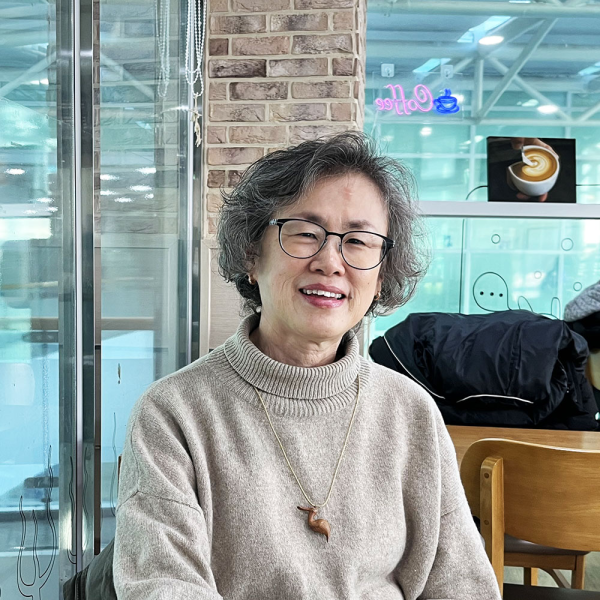
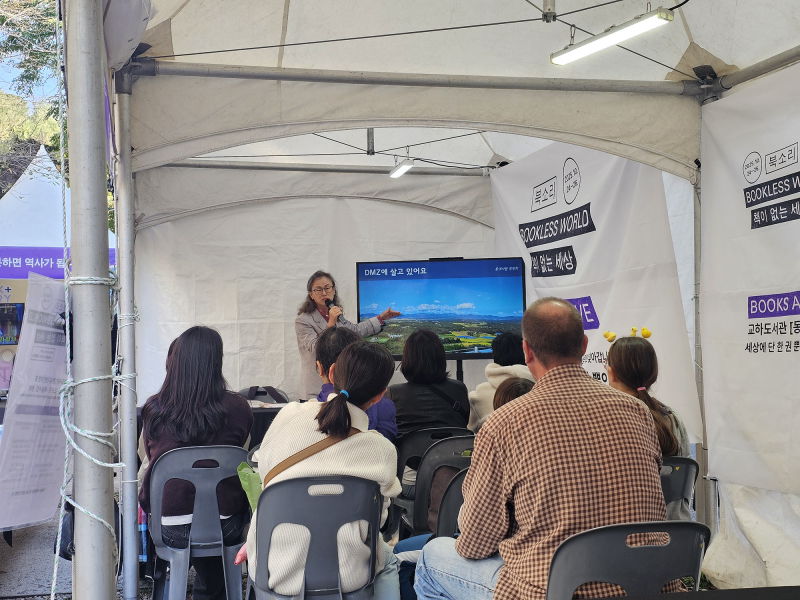
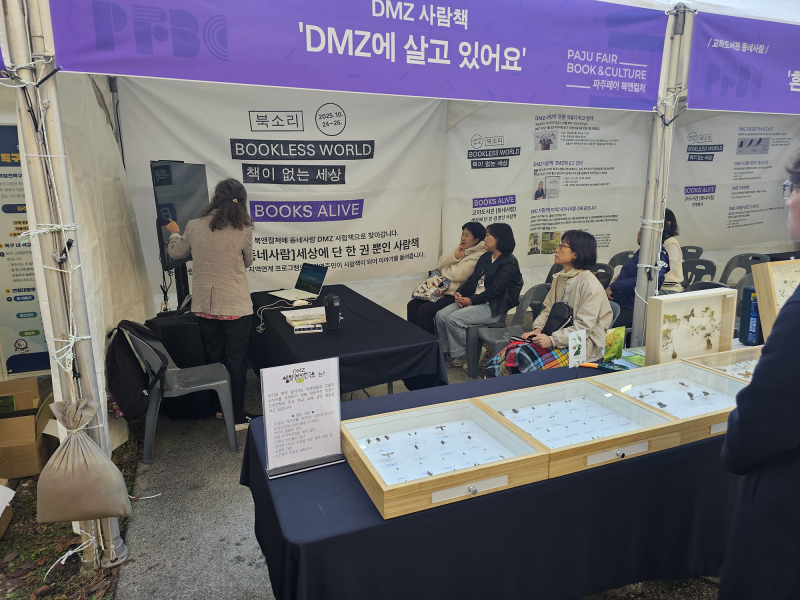
정명희, 2026. 1. 11. @ 파주 교하도서관
Myunghee Jeong, January 11, 2026 @ Paju Gyoha Library
about DMZ생물다양성연구소 | DMZ Biodiversity Research Institute(정명희 님께서 정리해 주신 문서 중 인터뷰 관련한 사항을 중심으로 인터뷰 내용을 추가하여 정리하였습니다.)
2025년 10월 이후 활동
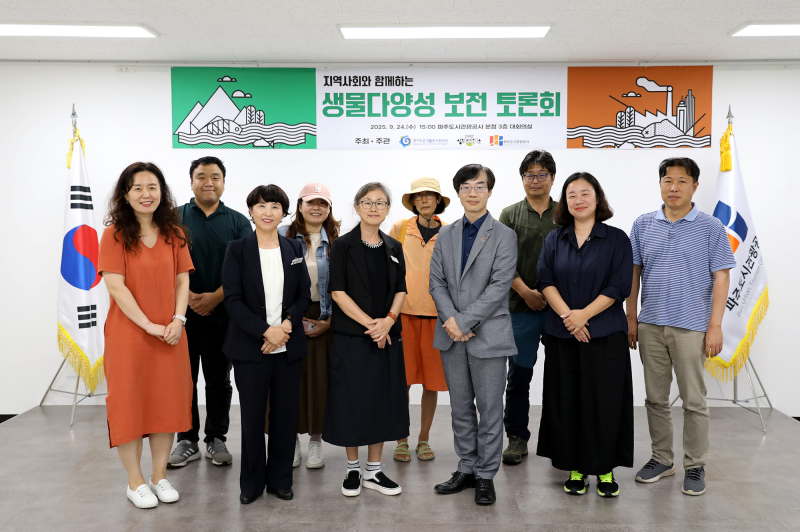
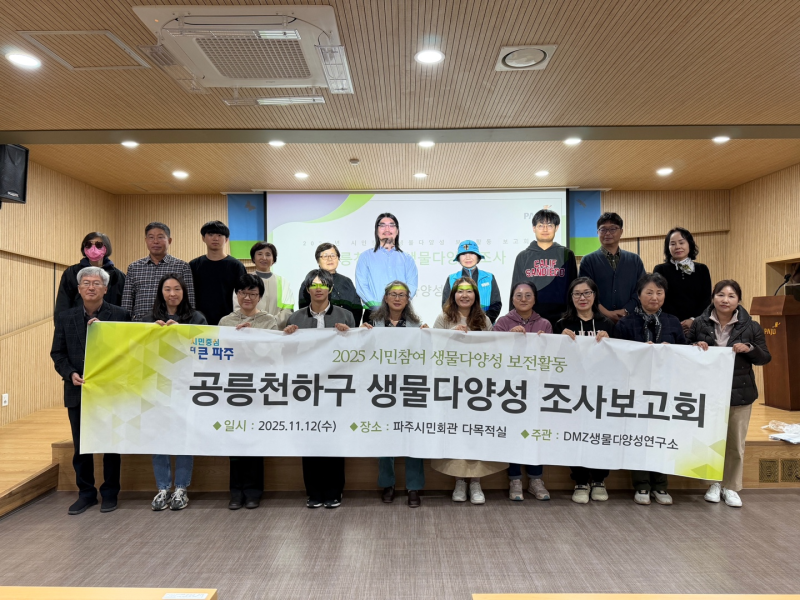
- 10.21. 연구소 3주년. 율곡습지공원 생태모니터링, 민통선 모니터링
나는 단순한 행사 참석자가 아니라 제3의 낙원을 실제로 만드는 사람, Praxis를 살아내고 있는 사람이다.
이 포럼은 활동가들에게 ‘혼자가 아닌 집단적 실천자’라는 정체성을 주고,
운동을 투쟁에서 돌봄과 설계의 영역으로 확장하며,
DMZ를 전환의 실험실로 바꾸는 출발점이 될 수 있다.
1. 나는 혼자가 아니다. 나는 변두리가 아니라 전환의 일부이다.
포럼은 고립된 실천을 연결된 실천으로 전환하는 플랫폼이다. 시민 활동의 의미를 다시 확인하면서 소진을 완화할 수 있다. 우리는 같은 방향을 걷고 있다는 정서적•전략적 연결망을 만들어주는 공간이고, 그래서 장기적인 활동의 지속성을 증가시킬 수 있다.
“예전에는 나를 따라라 식이었다면 지금은 특정 단체가 하나의 이슈를 선점해서 주도하는 것보다 소규모 활동이 들끓어서 어느 시점에 그 끓는 점들이 확 모아져야 한다는 생각이 듭니다. 진짜 풀뿌리지요. 느슨한 연대가 중요해지는 겁니다. 각자 맡은 분야에서 활동을 놓치지 말아야 한다고 생각합니다. 저는 제가 하던 일을 계속하고, 다른 분들도 계속하시고.
종합재 종합재미농장미농장의 책을 요즘 제가 읽고 있습니다. 젊은 분들이 참 열심히 활동하신다는 걸 또 새롭게 느꼈어요. 그런 분들이 지치지 않고 계속 활동해야 되고, 어느 시점에 또 커다란 이슈가 생겼을 때 우리가 같이 모여야 한다고 생각합니다. 그런 거를 할 때 예술 활동이 유효할 수 있는 것 같아요.”
2. 생태+포용+평화를 하나의 축으로 묶는 것은 한국 시민 사회에서도 매우 드문 시도이다.
단절된 분야별 활동을 횡적 연대로,
환경/인권/돌봄/평화로 분절된 의제를 통합적 논의로,
반대 중심에서 대안 제시 중심으로, 분노를 동원하기보다 공감을 확장하는 방향으로,
전문가 주도에서 시민 공동 설계로,
성과와 투쟁 중심의 활동을 과정•돌봄과 회복•예방 중심의 활동으로 전환할 수 있다.
실천민주주의(Demopraxy), 제3의 낙원(Third Paradise), 예방적 평화 (Preventive Peace), 다름을 사랑하기(Love Difference). 실천(Praxis). 자신의 활동을 개인적 헌신이 아니라 세계적 흐름 속의 정치적•문화적 실천으로 재정의할 수 있는 언어이다. 이는 공공기관 설득, 재원 확보, 시민 교육, 연대 구축에 실제로 사용할 수 있는 프레임이다.
“제3의 낙원에서 이야기하는 정반합이 인상적이었어요. 제가 하고 있는 활동이 정이고, 현재 접경 지역의 상황이 반이라면, 합은 절충점을 찾는 것입니다. 저도 10년 전에는 그냥 당위에 따라 외치기만 했고, 대안은 너희들이 찾아야지 주장했지만 그렇게는 싸움이 안 되더라고요. 그래서 이제는 생태계 서비스 지불제(마을 주민이나 토지 소유자가 깨끗한 공기, 수질 정화 등 자연이 주는 혜택, 즉 생태계 서비스를 보전·관리하는 활동을 할 때 정부나 지자체가 보상금을 지급하는 제도) 같이 법 테두리 안에서 우리가 할 수 있는 건 뭔가를 찾고 사람들에게 전하고 있습니다.”
3. 포럼을 통한 관점 전환 자체가 이미 큰 변화이다.
DMZ를 군사·안보 관점으로만 보지 않고 생태·치유·민주주의의 실험실로 바라보고,
평화를 외교나 정치 프레임이 아니라 일상의 실천(Praxis)이라는 관점으로 바라보며,
평화는 안보만이 아니라 삶의 질의 문제라는 인식, 환경은 불편한 것이 아니라 안전에 관한 문제라는 인식, 다양성은 나를 위협하는 것이 아니라 모두의 생존 전략이라는 인식으로 변화할 수 있다.
“DMZ는 절대 보전 지역이고, 접경 지역은 완충 공간이어야 하는데 지금 이 완충 지역이 무너지고 있습니다. 농경지가 매립되고 있어요. 논을 흙으로 다 메꾸고, 밭으로 만들죠. 이게 개발하는 단계예요. 논이 밭이 되었다가 비닐하우스였다가 거기다 나무를 심었다가 주택을 지을 수 있는 땅으로 자꾸 변화를 시키고 있습니다. 또, 폐기물을 매립해서 평탄화하는 땅이 많습니다. 그 땅이 어떻게 되든 상관없어요. 일단 땅만 평탄화되면 나중에 개발할 수 있게만 만들면 되니까. 농경지가 없어지고 폐기물이 전국에서 들어오고 있는 게 제일 큰 문제인데 파주시에서도 인식하고 있지만 막아내지 못합니다. 개인의 재산권이라는 논리 앞에서 무너지는 것이죠.
결국은 접경 지역이나 DMZ에 대한 정확한 이해가 없어서 더 그런 개발 논리에 취약한 것입니다. 통일에 관한 생각과 철학도 별로 없고요. 그러니 접경 지역의 성격이 뭔지 잘 이해 못하고 그냥 빈 땅으로만 생각하게 되죠. 생태적인 가치가 얼마나 큰지 잘 모르고, 그것 자체가 문화적인 가치이고 세계적인 가치라는 인식이 부족합니다. 사람들뿐 아니라 사실은 정부도 정치인들도 마찬가지입니다. 그래서 저는 이런 상황을 사람들에게 계속 알려줍니다. 여기 안에는 개발 압력이 굉장히 높다, 이러이러한 게 진행이 되고 있기 때문에 여기는 결코 평화적인 곳이 아니다, 항구적인 평화는 정말 요원한 곳이 여기다. 접경 지역 안에서의 개발 압력과 생태 가치에 대해서 계속 얘기하고 있습니다.”
이 방식도 시민 운동이구나, 싸우지 않아도 되는 운동도 있다
예술, 공동선언문, SDGs, DMZ 서사 연계의 가능성과 잠재력을 보았다.
“이번에 응원봉으로 세상을 바꾼 것처럼, 한류가 세계적으로 확산이 되면서 경제 논리까지 갖추게 되는 것처럼 이제는 다른 방식의 시민 운동이 되어야겠다고 생각했습니다. 그러던 중에 포럼에서 예술에 기대어 세상을 바꿔야겠다, 예술이 정말 필요하구나 중요하구나를 느꼈습니다. 사람의 마음을 가장 말랑말랑하게 해주는 게 예술 영역이라는 생각이 들어요. ”
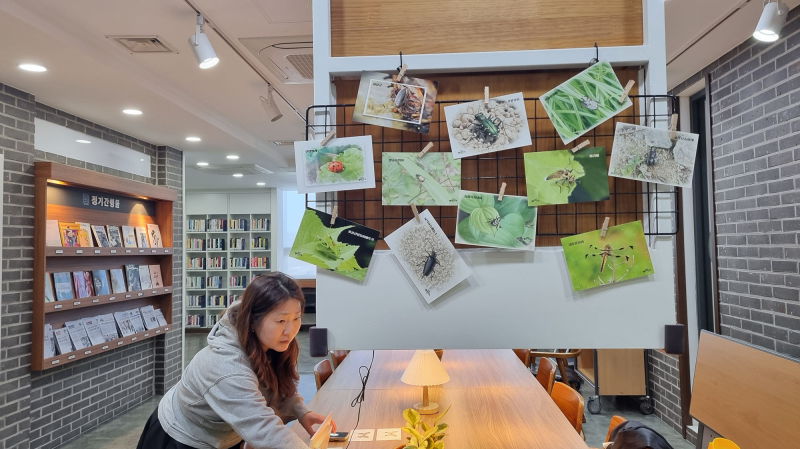
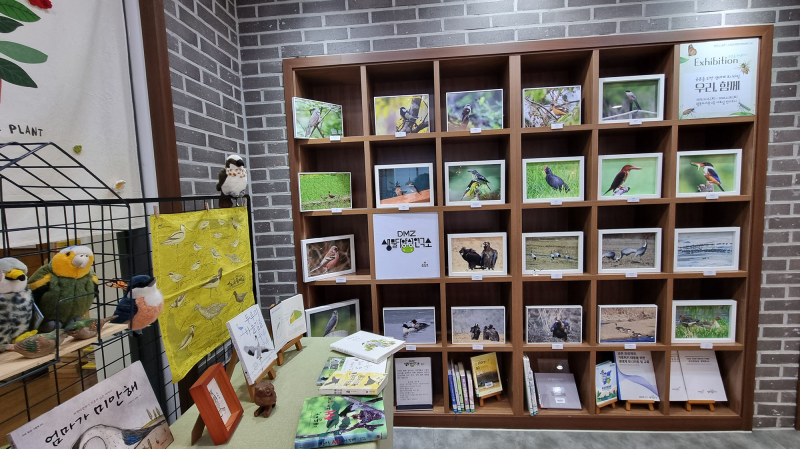
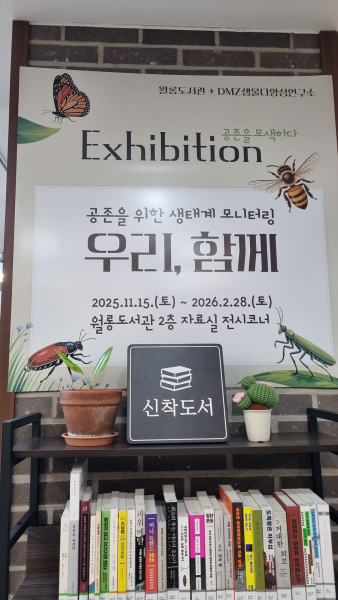
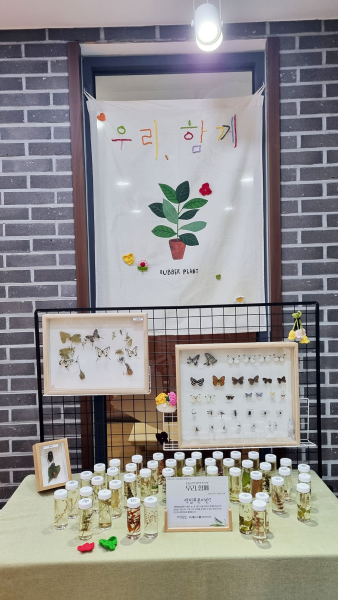
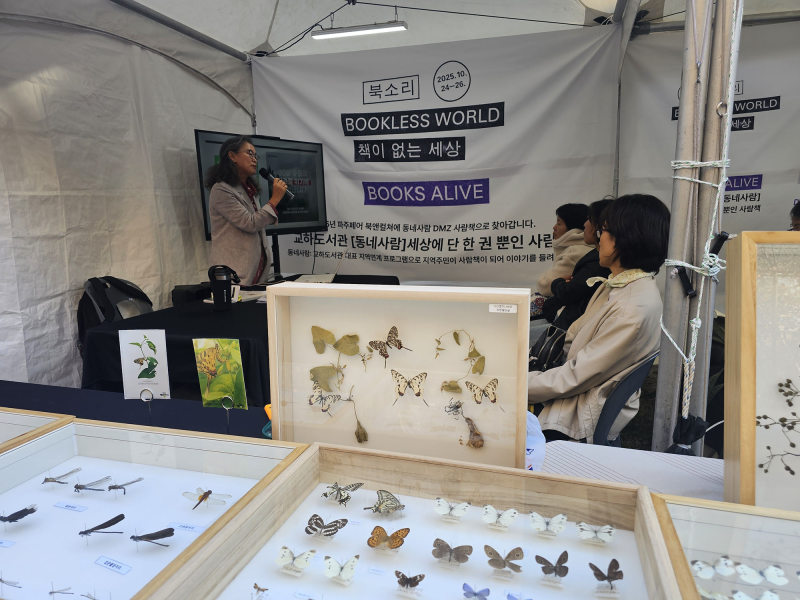
“예술이 가장 강력한 수단이라는 생각이 듭니다. 저는 그래서 요즘은 도서관에서 전시회를 하면서 파주의 생태에 대해서 자꾸 알려주는 역할을 하려고 합니다. 지금은
월롱도서관월롱도서관에서 전시회에서 전시회를 하고 있습니다. 작년에는 민통선에 있는 곤충과 식물 전시를 했고 올해는 조류의 생태 관련한 전시를 합니다. 이런 식으로 시민 인식을 증진시키는 활동을 앞으로도 계속 하려고 합니다.”
인터뷰, 편집 정소익
(The document organized by Myunghee Jeong has been revised to focus on interview-related sections and incorporate additional interview content.)
Activities after October 2025
- October 21: Third anniversary of the Institute; ecological monitoring of Yulgok Wetland Park and monitoring of the Civilian Control Zone (CCZ).
I am not just a forum attendee, but someone who is actually creating the Third Paradise, someone who lives praxis.
This forum can provide activists with a sense of identity as "collective practitioners, not individuals,"
expand the movement from struggle to the realm of care and co-design,
and serve as a starting point for transforming the DMZ into a laboratory for transformation.
1. I am not alone. I am not on the margins, but part of the transformation.
The forum is a platform for transforming isolated activities into connected practices. It can alleviate burnout by reaffirming the meaning of civic activism. It's a space that creates an emotional and strategic connection that we're all moving in the same direction, thereby increasing the sustainability of long-term activities.
"In the past, it was all about 'follow me,' but now, rather than a specific group preemptively taking the lead on a single issue, I think it's about small-scale activities boiling over, and at some point, those boiling points must converge. It's truly grassroots. Loose solidarity is becoming crucial. I believe we must not lose sight of our respective areas of activity. I continue what I'm doing, and others should continue to do the same. I've been reading a book by
Amusebyfarm recently. I've been struck by how passionately young people are working. They need to continue their work tirelessly, and when a major issue arises, we need to come together. I think that's when artistic activities can be effective."
2. Uniting ecology, inclusion, and peace into a single axis is a rare endeavor even in Korean civil society.
It can transform disconnected sectoral activities into horizontal solidarity,
transition fragmented agendas (environment, human rights, care, and peace) into integrated discussions,
shift from opposition-centered activities to alternative solution-oriented ones,
shift from mobilizing anger to expanding empathy,
shift from expert-led approaches to civic-led co-design,
and reshape activities from performance- and struggle-centered activism to practices centered on process, care, recovery, and prevention.
Demopraxy, the Third Paradise, Preventive Peace, Love Difference, and Praxis – these are the languages through which one can redefine one's activities not as individual commitments, but as political and cultural practices situated within a global context. This is a framework that can be practically applied to persuading public institutions, securing funding, educating citizens, and building solidarity.
"The thesis-antithesis-synthesis discussed in the Third Paradise was striking. If my work is the thesis, and the current situation in the CCZ is the antithesis, then the synthesis is finding a compromise. Ten years ago, I used to just cry out the normative moral imperative, insisting that you should find an alternative, but that approach failed to sustain the struggle. So now, we're looking for ways to implement programs like the Payment for Ecosystem Services (a system where the government or local government compensates villagers or landowners for activities that preserve and manage ecosystem services, such as clean air and water purification) within the legal framework. We're sharing this with others."
3. The shift in perspective brought about through the forum itself is already a significant change.
The DMZ can be viewed not solely through military and security perspectives, but as a laboratory for ecology, healing, and democracy.
Peace can be viewed not as a diplomatic or political framework, but as a daily practice (praxis).
Peace can be recognized not only as a matter of security but also as a quality of life; the environment is not an inconvenience, but a matter of safety; diversity is not a threat to individuals, but a survival strategy for all.
“The DMZ is an absolute conservation zone, and the CCZ should be a buffer zone, but this buffer zone is now collapsing. Farmland is being reclaimed. Rice paddies are being filled in with dirt and turned into fields. This is the development phase. The trend is constantly changing: rice paddies become fields, then greenhouses, then trees are planted, and finally, land for housing. There's also a lot of land being leveled by landfill waste. It doesn't matter what happens to that land, because once the land is leveled, it can be made ready for development. The biggest problem is the loss of farmland and the influx of waste from all over the country. Paju City recognizes this, but it can't stop it. It's crumbling under the guise of individual property rights.
Ultimately, a lack of understanding of the CCZ or the DMZ makes people more vulnerable to this kind of development logic. They also lack a clear understanding of the nature of unification and its philosophy. Consequently, they don't fully grasp the nature of the CCZ, and simply view it as empty land. They don't fully grasp its ecological value, and they lack the recognition that it has cultural and global value. It's not just the people, but the government and politicians as well.
So I constantly inform people about this situation. There's tremendous development pressure here. It is not a peaceful place here because of all these ongoing activities. Permanent peace is absolutely essential here. I continue to talk about development pressure and ecological value within the CCZ."
Ah, this is also a form of civic movement; there are forms of activism that don't require fighting.
I saw the potential and possibility of linking art, the joint declaration, the SDGs, and the DMZ narrative.
"Just as we changed the world with light sticks, and just as the Korean Wave has spread globally and even acquired an economic logic, I thought we should now move toward a different type of civic movement. Then, at the forum, I realized that we need to rely on art to change the world, and that art is truly necessary and important. I believe that the realm of art is what softens people's hearts the most."
"I believe art is the most powerful tool. That's why I'm currently holding exhibitions at libraries to educate people about the ecology of Paju. Right now, I have
an exhibition at the Wollong Library. Last year, we exhibited insects and plants from the CCZ, and this year, we are presenting an exhibition on bird ecology. I plan to continue this type of activity to raise public awareness going forward."
Interview, edited by Soik Jung
English editing by Alice S. Kim