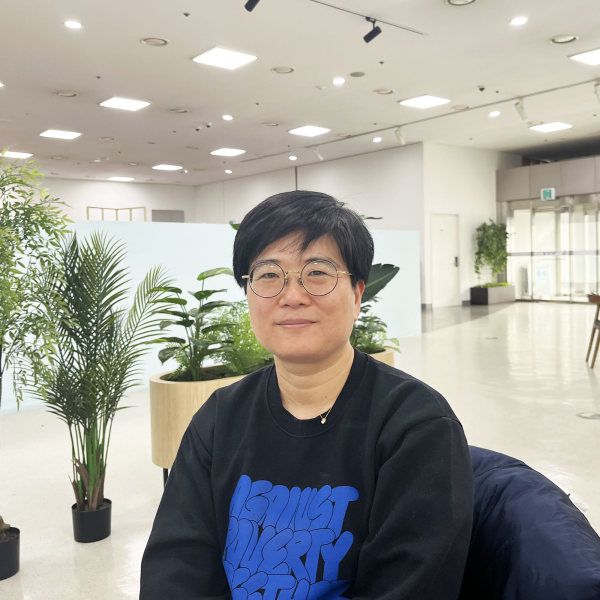
지오, 2026. 2. 5. @ 서울 동작구
Gio, Febraury 5, 2026 @ Dongjak-gu, Seoul
about
행동하는성소수자인권연대 | Solidarity for LGBT human rights of Korea
시민사회 활동에도 긍정 에너지가 필요하다
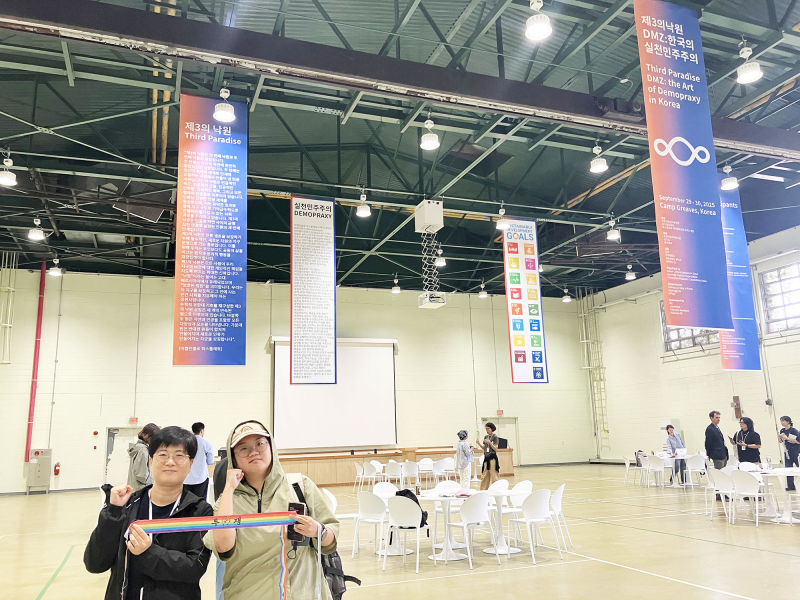
포럼에서 돌아오는 길에 시민사회 활동가들과 이야기하면서, 각자의 테이블에서 모두 같은 인상을 받았다고 느낀 지점이 있습니다. 사회적 기업 활동하시는 분들이 더 긍정적이라는 것. 이들의 활동이 일상에 침투한 ‘작은’ 활동이지만 자부심을 가지고 굉장히 긍정적으로 하고 있고 에너지를 가지고 있다는 것이죠. 시민사회 활동은 안 좋은 것들을 캐내고 거기서 문제점을 발견하기 때문에 그런 긍정형의 에너지를 느끼기가 쉽지 않습니다.
시민사회 단체가 회원 모임 정도로 할 수 있는 활동들을 사회적 기업은 사업화해서 진행합니다. 우리는 그런 것을 큰 활동에 따라오는 작은 영역의 활동, 동아리 활동으로 여기는 경향이 있어요. 그렇지만 사회적 기업의 움직임, 움직임을 만들려는 계속되는 노력, 아이디어 등은 사람들을 끌어당기는 힘을 분명히 주는 것 같습니다. 시민사회 활동에도 실천이 있죠. 거시적인 실천이고, 그래서 사실 대중을 얼마나 설득하고 있는가에는 물음표가 있기도 합니다. 계속 대중과 접점을 가지고 만나려 노력해야 한다는 이야기가 내부에서 계속 나오거든요. 포럼에서 사회적 기업 활동을 알게 되면서 이들의 비교적 미시적인 활동이 굉장히 소중하다는 것, 시민사회 단체도 이런 활동을 함께 긍정적으로 하면 좋겠다는 영감을 많이 받았습니다.
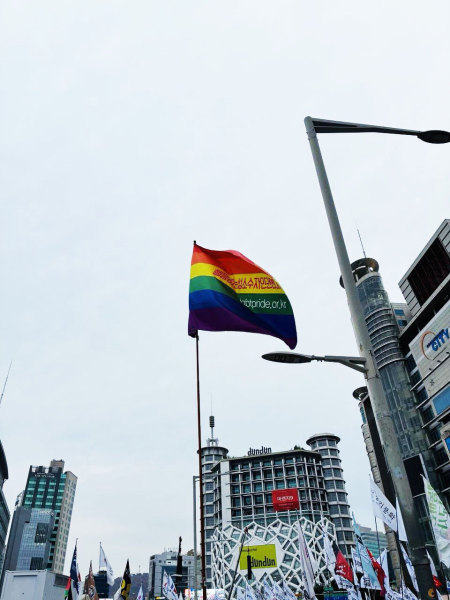
행성인은 깃발 들고 나간다
저희는 행성인이라는 이름으로 어디든 나가려 하고 단체를 적극적으로 드러내려고 합니다. 성소수자 문제뿐 아니라 여러 사회 문제에 적극적으로 목소리를 내고, 집회 현장에 가고요. 그런 소수자들이 있다는 걸 보여주려고 합니다. 그래서 실제로 깃발 들고 나가는 단체로 많이 알려진 편입니다.
행동하는성소수자인권연대 이름을 드러내고 활동하는 큰 이유는 회원들이 대체로 그런 활동을 하고 싶거나 지지하고 싶어서 오기 때문이고, 그래서인지 성소수자뿐 아니라 비성소수자 회원도 꽤 있습니다. 다양한 회원이 있는 만큼 원하는 활동 의제도 다양합니다. 성소수자들이 사회에서 갈 곳이 없을 때 행성인이 울타리가 되어주기를 바라기도 하고, 대중의 목소리에 귀를 기울이면서 세상을 바꾸자고도 하고, 심지어 성소수자 문제에 머물지 말고 다양한 사회 문제까지 활동 영역을 확장하자고도 합니다. 그 중간을 잘 찾아가려고 노력합니다.
돌봄과 성(性)에 관해 이야기하려 한다
내년이 행성인 30주년입니다. 올해는 30년 이후 우리 방향은 어떠해야 하는지를 준비하는 단계일 듯합니다. 상반기에는 퀴어들이 당면한 긴 호흡의 의제를 발굴해 보려 합니다. 노년의 퀴어를 위한 ‘돌봄’ 같은 거요. 노년 퀴어를 위한 돌봄은 무엇인지, 노년 퀴어 공동체가 있다면 어떤 형태일지, 행성인은 어떤 돌봄을 할 수 있는지, 노인을 위한 사회는 어떻게 재편되어야 하고 그 체계 안에서 성소수자는 어떤 위치에 있는지, 이런 것들을 이야기하겠죠. 또, 결국 경제력, 그리고 혼자 사는 것에 대한 두려움이 큰 문제라서, 사회가 돌봄을 어디까지 책임지고 어느 정도로 체계가 준비되어야 두렵지 않게 살 수 있을까도 이야기하게 될 겁니다. 그러고 나면 정책 같은 것에 반영해 볼 생각입니다.
올해에는 또 작년에 이어 성에 관해 더 이야기해 보려 합니다. 퀴어들이 성소수자인데 이상하게 성 이야기는 안 하고 소수자 이야기를 많이 해요. 성소수자로서 성을 이야기할 필요가 있다고 생각해서 작년에 이야기를 시작했습니다. 우리를 반대하는 사람들이 우리의 성에 관해 굉장히 잘못된 이야기를 퍼뜨리기도 하는데 우리는 우리 권리와 반박할 내용을 정작 잘 모르지 않는지, 우리 스스로 성 이야기를 터부시하거나 부끄러워하거나 사생활로 치부하지 말고 제대로 이야기해 보자는 것이었죠. 올 상반기에는 더 이야기 나누고, 하반기에는 이를 어떤 운동, 활동의 언어로 만들 수 있을지 가늠해 보려고 합니다.
세상이 어떻게 변해도 평등, 인간의 존엄함이라는 가치는 변하지 말아야 한다
세상에는 평등과 인간의 존엄함이라는 가치가 변하지 말아야 한다는 원칙이 있어야 하고, 저는 그 원칙을 확인해 주는 것이 차별금지법이라고 생각합니다. 이 원칙이 잘 서 있으면 모순되거나 오작동되는 지점을 제대로 바라볼 수 있죠. 예를 들어, 남성 역차별. 남성들이 역차별 이야기하면서 여성을 향해 분노를 표출하는데, 사실 여성들이 그러라고 한 적이 없습니다. 여성에게 분노하는 대신 왜 이런 기준이 생겼는지, 그 기준은 지금도 유효한지, 혹시 그 기준이나 차이가 성별 이분법을 오히려 공고히 하고 있는 건 아닌지 생각해 봐야 해요. 시스템을 바꿔야 하는 겁니다. 이 일을 요구할 수 있는 사람들이 요구하지 않고 장애인이나 여성처럼 엉뚱한 사람들을 욕합니다. 불만은 위를 향해야 하는데 아래를 표적으로 하는 것이지요. 이런 상황 자체가 우리 사회에 평등이 뭔지, 존엄하게 산다는 게 뭔지에 대한 원칙을 배울 자리가 없었고, 생각도 해본 적이 없음을 보여준다고 생각합니다. 그냥 남이 정해주면 질문하지 않고 수동적으로 받기만 한 것이에요. 삶을 들여다보지 않고 자기 입장만 생각한 거죠. 차별금지법이 이렇게 기초적인 윤리, 도덕이 무너지고 있는 상황에 경종을 울릴 수 있다고 생각합니다.
인터뷰, 편집 정소익
Civil Society Activities also Need Positive Energy
On my way back from the forum, while talking with civil society activists, I felt there was a point where everyone at our respective tables shared the same impression: that those involved in social enterprises are more positive. Although their activities may be "small" initiatives that permeate daily life, they carry them out with pride and great positivity, possessing a powerful energy. It is not easy to sense that kind of positive energy in civil society work, since it often involves digging up negative issues and identifying problems.
Social enterprises commercialize and carry out activities that civil society organizations might typically conduct as mere member gatherings. We tend to view these as small-scale activities or club activities that follow larger initiatives. However, the movements of social enterprises, their continuous efforts to create those movements, and their ideas clearly seem to possess a power that attracts people. Civil society work involves practice as well. It is a macro-level practice, and therefore, there are actually question marks regarding how effectively it is persuading the public. Internally, there is constant talk that we must strive to maintain contact and engage with the public. Learning about social enterprise activities at the forum gave me great inspiration, realizing how valuable their relatively micro-level activities are and wishing that civil society organizations would also engage in such activities alongside them.
HaengSeongIn Marches Under Its Banner
We strive to show up wherever possible under the name HaengSeongIn and actively make our organization known. We speak out on various social issues, not just sexual minority issues, and attend rallies. We aim to show that such minorities exist. That is why we are actually quite well-known as an organization that marches under its banner.
The main reason we operate under the name “Solidarity for LGBTQ Human Rights of Korea” is that members generally join because they want to participate in or support such activities; perhaps for this reason, we have quite a few non-LGBTQ+ members in addition to LGBTQ+ members. Just as our members are diverse, so too are the desired agendas for our activities. Some hope that HaengSeongIn will serve as a protective shield for sexual minorities when they have nowhere to go in society, others advocate for changing the world by listening to the voices of the public, and some even suggest expanding our scope of activity beyond just sexual minority issues to include various social problems. We strive to find the right balance between these perspectives.
We Intend to Discuss Care and Sexuality
Next year marks the 30th anniversary of HaengSeongIn. This year would be a period for preparing our direction for the next 30 years. In the first half of the year, we plan to explore long-term agendas facing the queer community, such as "care" for the elderly. We will discuss what care for the elderly entails, what form an elderly queer community might take, what kind of care HaengSeongIn can provide, how society for the elderly should be reorganized, and what position sexual minorities hold within that system. Furthermore, since economic power and the fear of living alone are major issues, we will discuss the extent to which society should take responsibility for care and how well-prepared the system needs to be so that people can live without fear. After that, we intend to reflect these findings in policies.
This year, continuing from last year, we also plan to discuss sexuality more. Although queer people are sexual minorities, it is strange that we talk a lot about being minorities rather than about sex. We started this discussion last year because we felt it was necessary to talk about sexuality as a sexual minority. People who oppose us often spread very false narratives about our sexuality, and we wondered if we ourselves are not fully aware of our rights and what needs to be refuted. Our intention was to encourage us to talk properly about sex, rather than treating it as a taboo, feeling ashamed of it, or dismissing it as a private matter. We plan to continue these discussions in the first half of this year, and in the second half, we intend to gauge how we can transform this into the language of a movement or activism.
No Matter How the World Changes, The Values of Equality and Human Dignity Must Remain Unchanged
I believe there must be a principle in the world that the values of equality and human dignity must not change, and that an anti-discrimination law serves to affirm that principle. If this principle is firmly established, we can properly identify points of contradiction or malfunction. For example, reverse discrimination against men. Men express their anger toward women while talking about reverse discrimination, but in fact, women never asked for the discrimination of men. Instead of being angry at women, we need to consider why such side effects emerged, whether women’s quota systems are still valid, and whether those things are actually reinforcing the gender binary. We must change the system. Those who are in a position to demand this fail to do so; instead, they blame extraneous groups like the disabled or women. Complaints should be directed upwards, but they are targeting those below. I believe this situation itself demonstrates that our society has never had a place to learn the principles of what equality is or what it means to live with dignity, nor has it ever been thought about. People have passively accepted what others have determined for them without questioning it. Having only thought about their own position they have neglected to examinn their lives. I believe an anti-discrimination law can serve as a wake-up call at a time when basic ethics and morality are collapsing.
Interview, edited by Soik Jung
English editing by Alice S. Kim