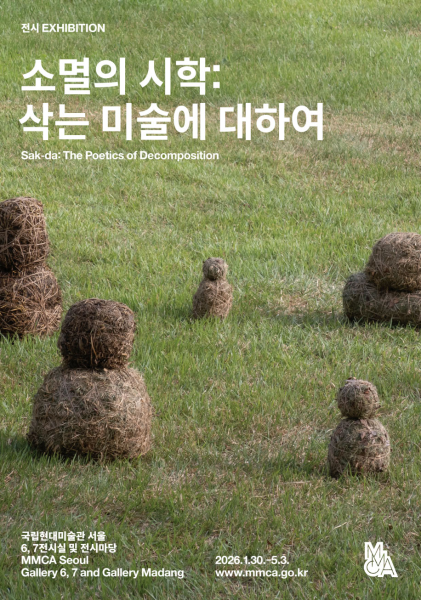
국립현대미술관 서울 전시 《소멸의 시학: 삭는 미술에 대하여》, 2026. 1. 30. - 5. 30.
MMCA Seoul exhibition 《Sak-da: The Poetics of Decomposition》, January 30 - May 30, 2026
about
라이스브루잉시스터즈클럽 | Rice Brewing Sisters Club 전시 《소멸의 시학: 삭는 미술에 대하여》| Exhibition 《Sak-da: The Poetics of Decomposition》작가는 미술관에 폐기를 위임하거나 창고에 보관하며 재료를 잠재우는 기존의 방식을 어떻게 극복할 수 있을까? 미술도 분해된 자원을 다시 생산으로 이끄는 순환의 체제를 만들 수 있을까? ‘전시 이후의 삶’에 놓인 재료를 더 적극적으로 대할 수는 없을까? 이러한 질문들이 라이스브루잉시스터즈클럽이 ‘사회적 발효’라는 개념으로 비인간, 인간, 공동체 사이의 협력 관계를 재구성하고 다양한 협력 구조를 시도하는 시작점이 되기도 하였다. RBSC는 우뭇가사리, 누룩, 섞어띄움비와 같은 다양한 유기물을 재료로 하거나 이들의 소멸하는 관계성을 작업의 중심으로 하여 공동체적 관계를 예술적 실천으로 옮기는 과정을 시도하였다. 하지만 이러한 재료와 관계망들은 언제나 변화하거나, 변질되거나, 때로는 분해, 휘발된다. 그리고 지속적인 돌봄과 관리를 요하는 재료와 작업 방식은 미술관이 가진 규범이나 유통 방식 안에서 충돌을 일으켰다.
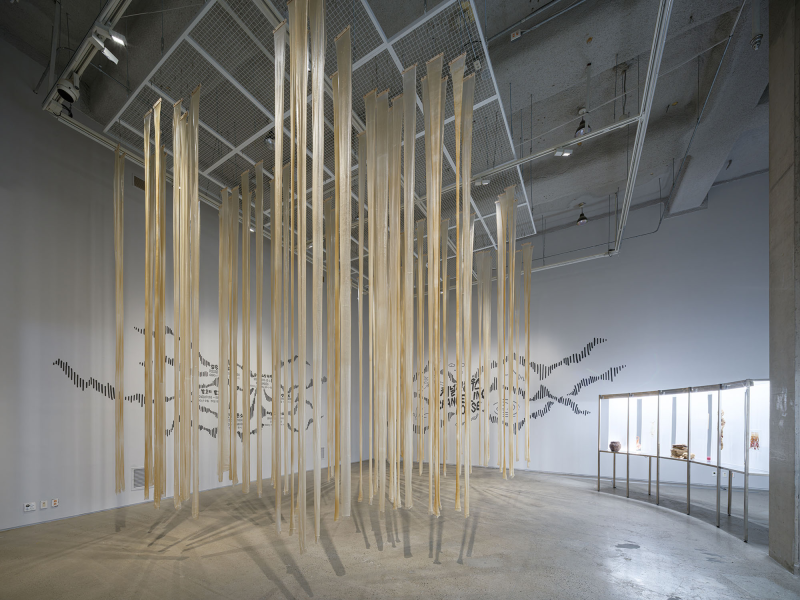
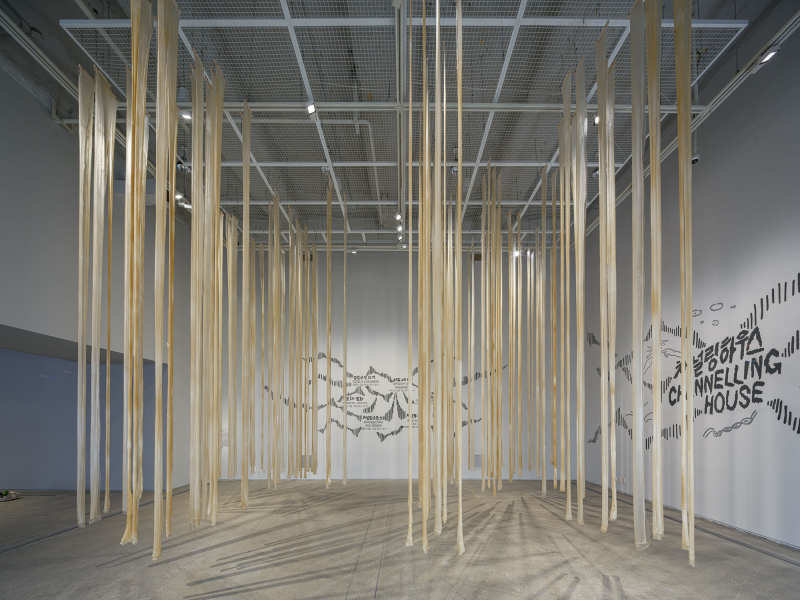
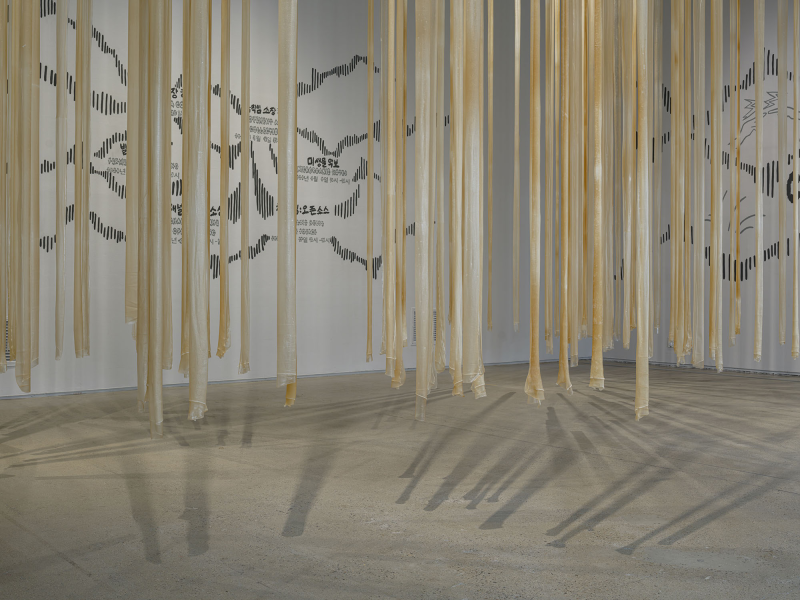
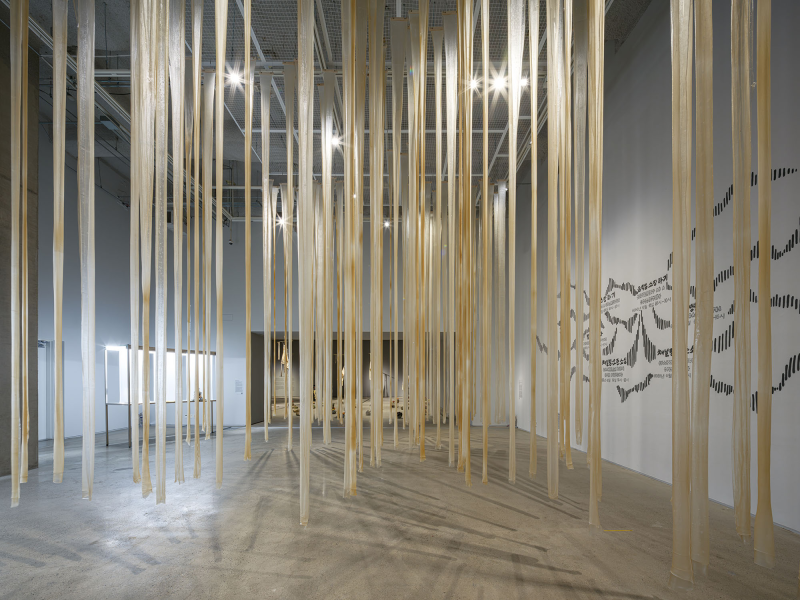
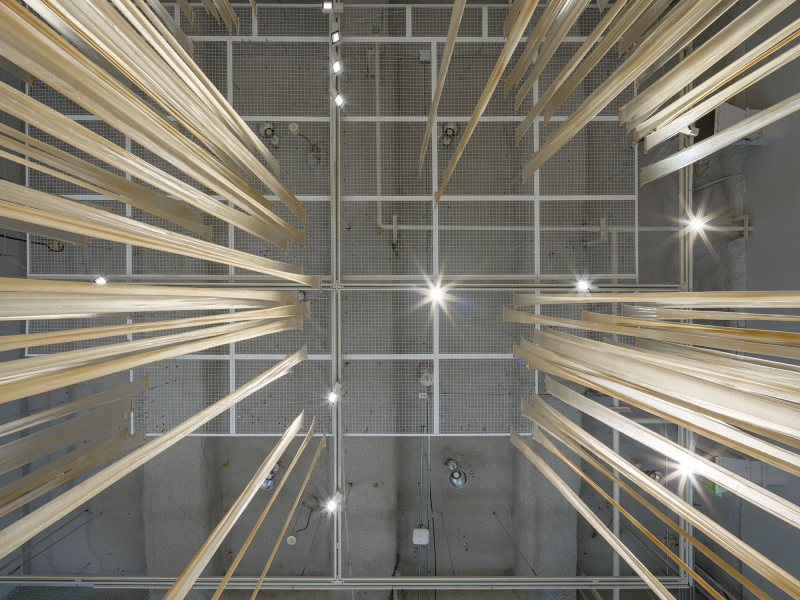
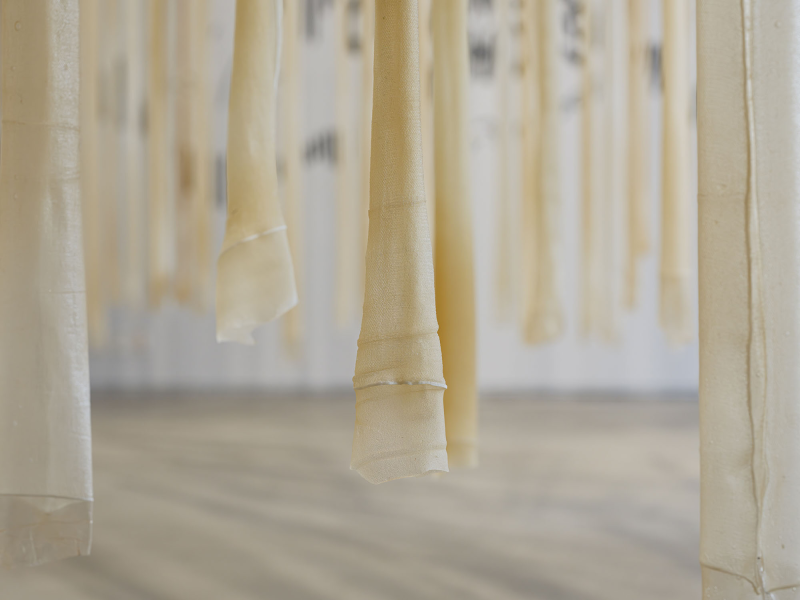
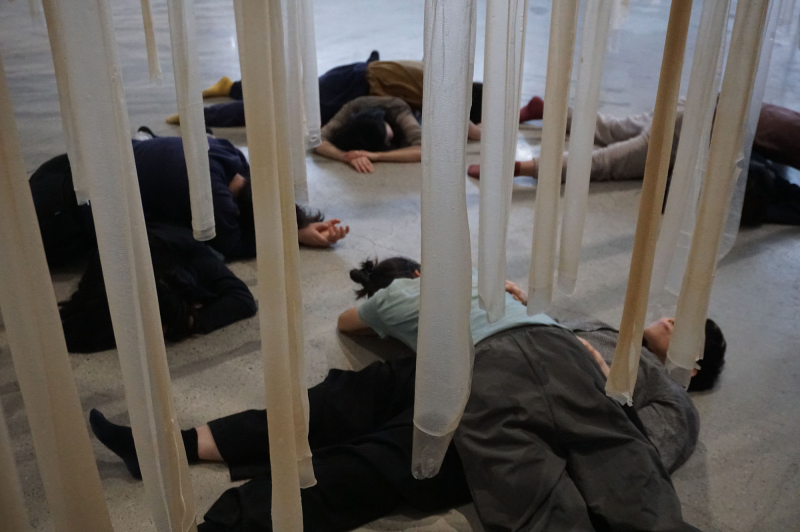
이번 전시에서 라이스브루잉시스터즈클럽은 ‘유기적, 무기적 재료’, ‘순환’, ‘사회적 발효’를 키워드로 과거의 작업에서 추출된 텍스트, 사운드, 조형물을 하나의 설치로 재구성한다. 합체된 우무와 천은 피부와 같은 감각기관이다. 우무와 천을 조합한 설치물은 움직임 센서/신시사이저와 연결되어 공간에서 일어나는 움직임을 감각하는 신경계처럼 작동하고 공간을 채운다. 작업에서 제안되고 발생하는 실천, 접촉, 상호작용을 상징하는 설치물은 이러한 행위들이 결국 관통하는 보이지 않은 어떠한 환경, 시스템을 조성하면서 청각화, 시각화해 나간다. 공간은 그 안에서 일어나는 행위에 따른 결과물이 축적되는 장소이자 접촉, 상호작용의 휘발성과 순간의 경험이 전승하는지에 대한 물음이다. 유기적인 물질과 무기적 행위들은 부패, 영원하지 않은 것, 사라지는 것, 경험을 통해 우리 몸에 축적해 나가는 것이다. 이 여정에서 사운드, 퍼포먼스, 매체로 쌓이는 순간들을 포착하고 점차 시각적 퍼포먼스로 구성한다.
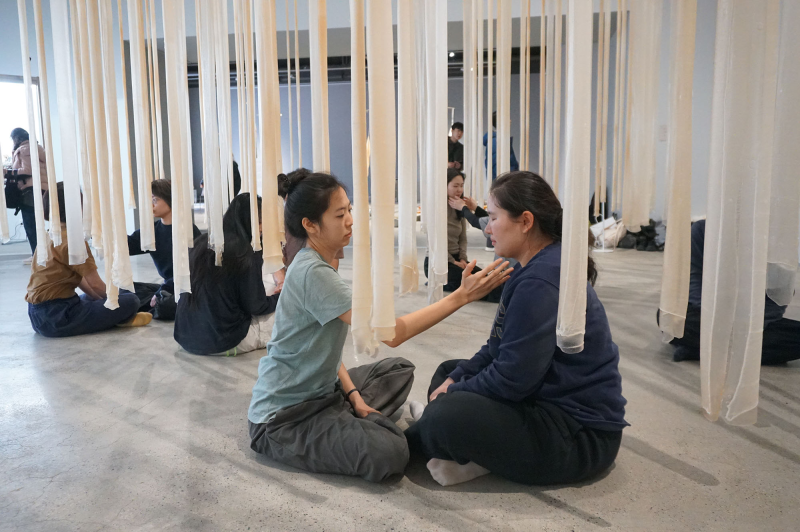
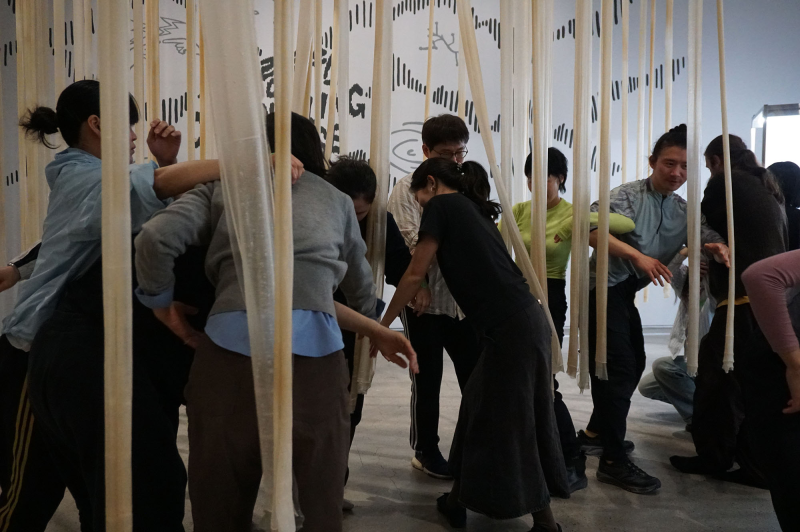
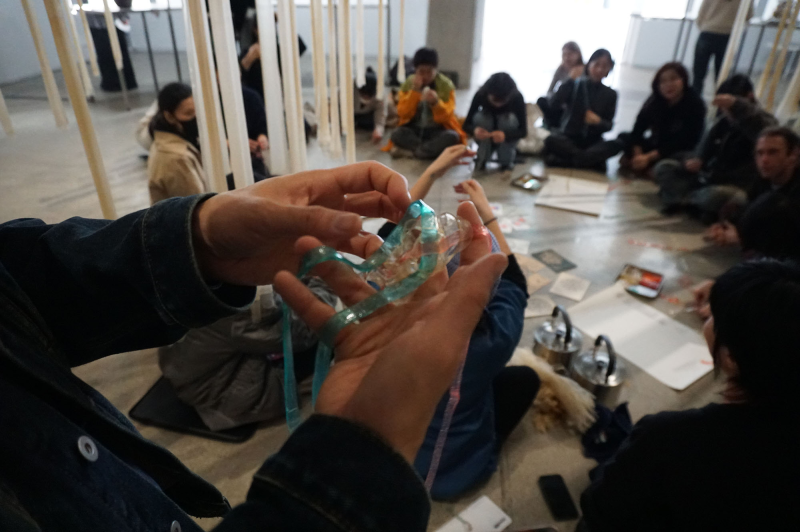
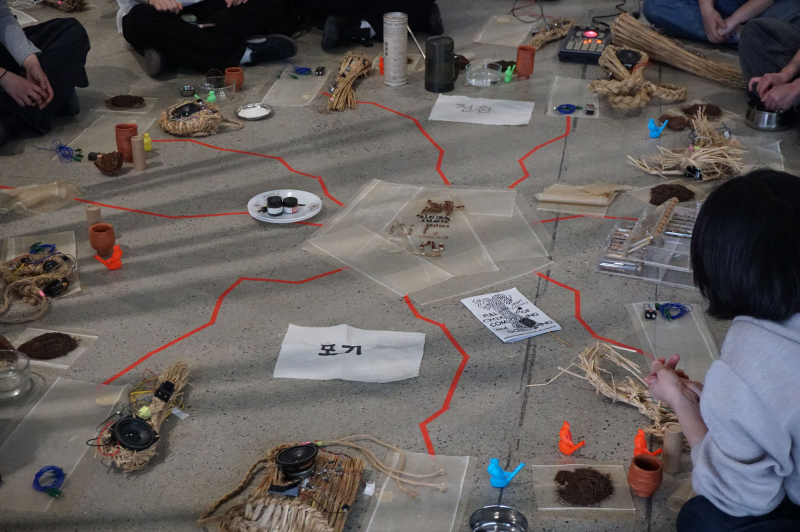
그리고 이 설치물을 플랫폼 삼아, 전시 동안 분해와 관련된 다양한 워크숍을 진행한다. 각 워크숍은 생산, 소비, 분해, 공동 소유, 공유, 순환, 포기라는 키워드로 라이스브루잉시스터즈클럽이 작업에서 실천했던 분해의 다양한 실천 방식을 시전하며 작품을 다루는 태도를 예시하고 그 가능성을 탐사한다. 우리 생태계가 그러하듯.
글: 국립현대미술관 전시글, 라이스브루잉시스터즈클럽 작업 노트에서 발췌
전시 사진: 국립현대미술관 제공. 사진 홍철기
워크숍 사진: 라이스브루잉시스터즈클럽 제공
How can artists overcome the conventional practice of leaving materials dormant by entrusting their disposal to a museum or storing them in a warehouse? Can art also create a circulation system that leads decomposed resources back into production? Can we not engage more actively with materials placed in their “life after the exhibition”? These questions served as the starting point for the Rice Brewing Sisters Club (RBSC) to reconstruct cooperative relationships between the non-human, the human, and the community through the concept of “social fermentation,” and to attempt various cooperative structures. RBSC attempted to translate communal relationships into artistic practice by using various organic materials such as agar, yeast, and mixed fermented compost, or by centering their work on their fading relationships. However, these materials and networks of relationships are always changing, deteriorating, or sometimes decomposing and evaporating. Furthermore, materials and working methods requiring continuous care and management clashed with the norms and distribution systems of the museum.
In this exhibition, the RBSC reconstructs texts, sounds, and sculptures extracted from past works into a single installation, using the keywords “organic and inorganic materials,” “circulation,” and “social fermentation.” The combined jelly and fabric serve as sensory organs akin to skin. Connected to motion sensors and synthesizers, the installation functions like a nervous system that senses movement occurring within the space, filling the environment. Symbolizing the practices, contacts, and interactions proposed and occurring within the work, the installation creates an invisible environment or system through which these actions ultimately permeate, thereby turning them into sound and image. The space is a place where the results of the actions occurring within it accumulate, and at the same time, it poses the question of whether the volatility of contact and interaction, and the experience of the moment can be transmitted. Organic materials and inorganic actions represent decay, the impermanent, the vanishing, and the accumulation of experiences within our bodies. In this journey, the moments accumulating through sound, performance, and media are captured and gradually constructed into a visual performance.
Furthermore, using this installation as a platform, various workshops related to deconstruction will be conducted throughout the exhibition. Each workshop, under the keywords of production, consumption, deconstruction, co-ownership, sharing, circulation, and relinquishment, demonstrates the various methods of deconstruction practiced by the RBSC in their work, illustrating an approach toward handling artworks and exploring their potential. Just as our ecosystem does.
Text: Excerpted from the exhibition text of MMCA and the Rice Brewing Sisters Club's work notes.
Exhibition photos: Courtesy of MMCA. Photo by Cheolki Hong.
Workshop photos: Courtesy of the Rice Brewing Sisters Club.