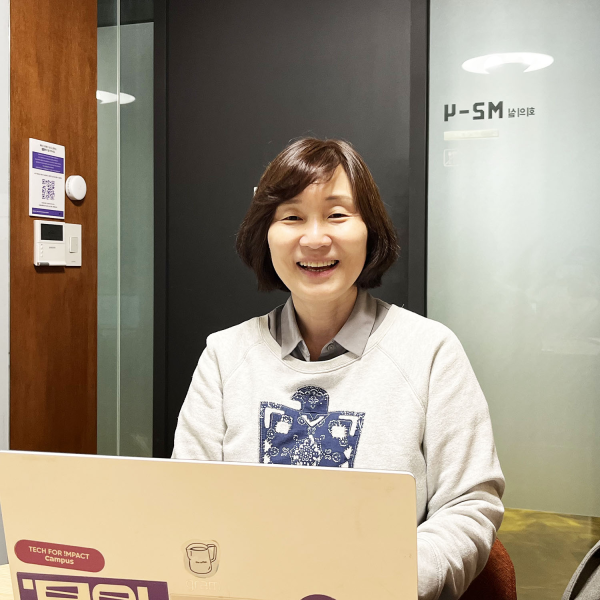
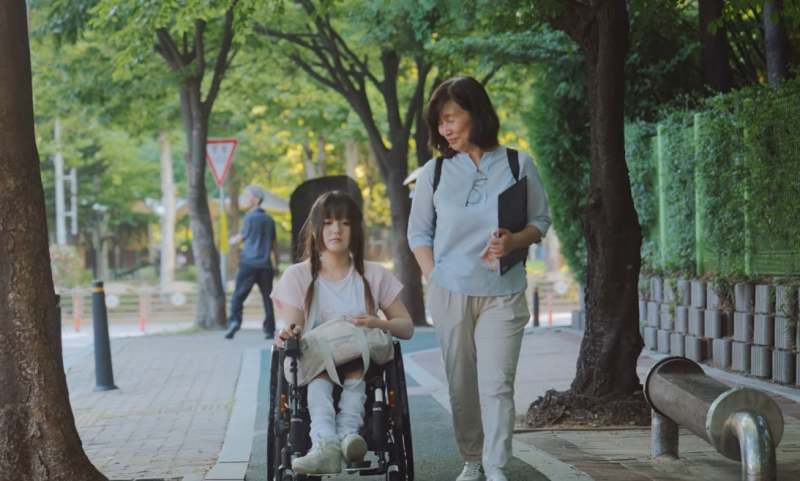
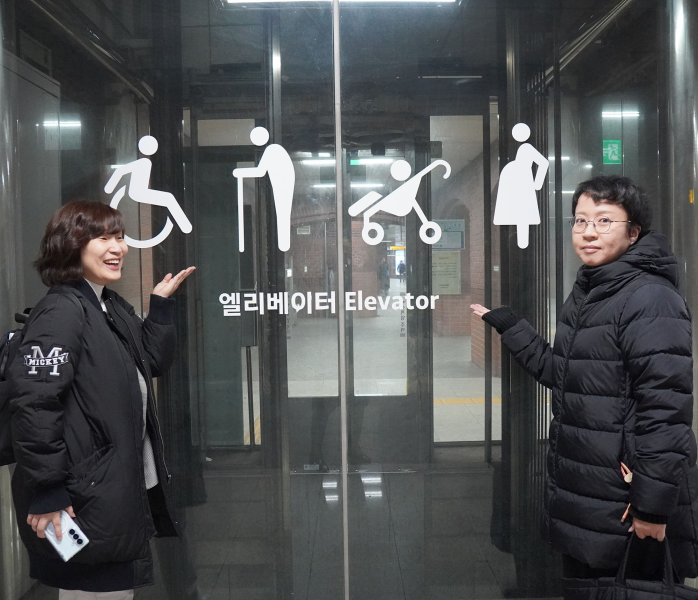
휠체어를 타는 제 딸과 다니면서 엘리베이터 안내 표지만 제대로 되어 있으면 좋겠다는 생각에서 무의 활동을 시작했습니다. 휠체어 이용자는 엘리베이터를 이용해야 하는데, 지하철의 이동 안내 표지판은 계단이나 에스컬레이터처럼 걸어 다니는 사람 위주로 되어 있어서 한참 헤매거든요. 시청역에서 비장애인들이 5분 정도면 가는 길을 휠체어는 15분 넘게 이동해야 하고, 헤매면 30분도 걸립니다. 표지가 엉망진창이고, 오래 돌아가야 하고, 그러면 화나고, 또 집에서 나오기가 싫어지죠. 제가 그런 경험을 많이 해서, 2016년 김건호씨가 만든 무의란 조직에 합류하고, 이사장이 되고,
지하철 교통약자 환승 지도를 만들었습니다. 그때에는 역사에 안내 표지를 붙일 수 있는 현실적인 방법이 없었어요. 그래서 웹 형태로 지도를 만들었습니다. 전에는 지도가 그림 형태였는데 지금은 API 형태고요, 자원봉사자들이 정확성 검토를 하고 있습니다.
서울역에 안내 표지를 붙이긴 했는데 절반밖에 못 붙였습니다. 서울역에 5개의 지하철 노선이 지나가고, 그중에 2개는 서울시의 서울교통공사가, 나머지는 공항철도, 국토교통부의 코레일, 그리고 GTX가 관리하고 있거든요. 5개의 관할 영역 사이에 사각지대가 있고 전체를 연결하는 안내 표지를 만드는 일은 아무도 안 하고 있습니다. 그런데 국토교통부에서 연락이 와서 서울역 빈 구간을 돌아보기도 했으니 앞으로 기대해봐야겠죠.
휠체어 픽토그램이 예전에는 정적인 모습이었지만 표시였지만 요새는 동적인 모습을 많이 씁니다. 뉴욕에서 어떤 공공디자이너가 게릴라성으로 했던 거고, 사람들이 알게 되면서 휠체어가 자기 혼자 움직일 수 있구나 라는 걸 인식하게 되었어요. 유아차를 몰고 〈모두의 지하철〉 리서치에 참여한 분이, 유아차를 끌고 오면 지하철이 너무 불친절한 공간이고 우리가 투명 인간인 듯한 느낌을 받았는데, 선명히 보이는 픽토그램과 청록색 띠를 보니 우리의 존재를 인정해 주는 것 같아 너무 좋았다고 했습니다. 저는 디자인으로 분명히 가시화하는 것이 너무 중요하다고 생각합니다. 서비스가 불균질하면 나는 환영받지 못하는구나, 나다니지 말라는 이야기구나 느끼는 사람들이 생깁니다. 픽토그램으로 교통약자를 박아놓는 것이 어떤 사람에게는 비장애인에 대한 배제나 역차별로 보일 수 있지만 어떤 사람에게는 존재를 인정받는 것입니다.
무의가 SM, YG, LG전자 등의 기업들과 CSR 프로젝트로 접근성 프로젝트를 하는데, 항상 임직원을 끼워달라 요청합니다. 담당자의 니즈나 의지에 따라 호응이 다릅니다만, 되도록 많은 사람이 무의 활동에 간접적으로 경험해 봤으면 좋겠고, 무엇보다도 그 조직 내부의 변화를 만들고 싶어서요. 예를 들어,
〈모두의1층〉 프로젝트를 제안할 때 다양한 패키지를 구성합니다. 임직원들이 직접 참여해서 경사로를 설치하고 색칠하거나 리서치를 할 수 있고, 또는 그냥 자금을 지원받고 무의가 실행하는 방식도 있는데 우리는 되도록 같이하면 좋겠다고 이야기하죠. 그리고 그 기업의 본질에 맞추어 할 수 있는 방법을 많이 생각합니다. 건설 감리 기업과는 휠체어로 접근할 수 있는 곳들의 지도를 만드는 활동을 하면서 휠체어로 직접 다녀보았습니다. 우리의 목표는 이분들이 작은 턱도 진짜 힘들다고 체험하고 나중에 업무에서 접근성을 법이 요구하는 것 이상으로 더 적용해야겠다고 느끼는 것이었어요. LG전자에는 장애인에게 편하게 만들면 노인에게도 편해진다, 지금 실버 가전 시장이 커지고 있는데 기업에 도움이 되니 장애인을 민원인이 아니라 고객으로 생각해야 한다, 장애인이 직접 참여해서 프로젝트를 하면 좋겠다 등의 이야기를 많이 합니다. 무의가 그런 활동들을 만들어 주는 프로젝트를 하죠. 재작년에 무의와 LG전자가 함께
볼드 무브라는 프로젝트를 했습니다. 장애인들이 가전 기능을 제안할 뿐만이 아니라 볼드 무브 커뮤니티 활동을 통해 자신감을 찾아가는 것이 주제였습니다. 올해도 아마 계속하게 될 것 같아요. 이런 기업들이 좀 많이 나왔으면 좋겠습니다.
인터뷰, 편집 정소익
From the Subway Transfer Map for Vulnerable Passengers to a Subway for All
I started the work of Muui with the thought that it would be great if just the elevator signage were properly set up, while getting around with my daughter who uses a wheelchair. Wheelchair users need to use elevators, but subway navigation signs are designed primarily for pedestrians, such as those using stairs or escalators, so you end up getting lost for a long time. At Seoul City Hall Station, a route that takes about 5 minutes for non-disabled people takes over 15 minutes for a wheelchair user, and if they get lost, it can take up to 30 minutes. The signage is a mess, and having to take a long detour makes wheelchair users frustrated and makes them not want to leave the house. Having experienced this many times, I joined Muui, founded by Kim Geon-ho in 2016, became its chairman, and created the
subway transfer map for vulnerable passengers. At that time, there was no practical way to post guide signs inside the stations. So, I created a map in a web-based format. Previously, the map was in graphic form, but now it is in API format, and volunteers are reviewing its accuracy.
The
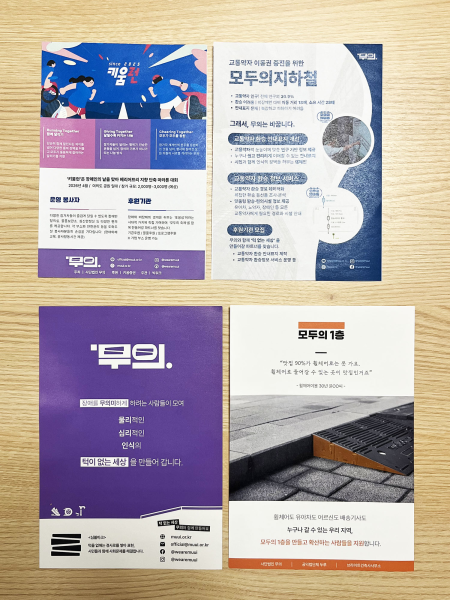
Subway for All project is a realization of the idea that, after 10 years since creating the map, the ultimate goal should be an environment where one can navigate without looking at a map, and that this requires properly installed signage. Muui is collaborating with the Seoul Metropolitan Government, Seoul Metro, and Hyundai Rotem. This is a CSR project proposed by Muui to Hyundai Rotem, and with Hyundai Rotem's support, we are installing signs on lines operated by Seoul Metro that allow wheelchair users to easily locate elevators. Since existing signs are difficult to see, we are installing additional, more visible ones. We conducted research with Hongik University last year, and this year, we installed signs at 10 stations, including Seoul City Hall Station and Seoul Station. We are now in the stage of measuring the impact to expand the initiative further. Our goal for this year is to conduct further research and incorporate the findings into the Seoul Metropolitan Government's Public Design Guidelines. Our intention is to expand this initiative to other stations as well.
Hitting a Wall: Bureaucratic Silos and a Lack of Understanding of Universal Design
We managed to install signs at Seoul Station, but we were only able to cover half of the station. Five subway lines pass through Seoul Station; two are managed by the Seoul Metro under the Seoul Metropolitan Government, while the rest are managed by the Airport Railroad, Korail under the Ministry of Land, Infrastructure and Transport(MOLIT), and the GTX. There are blind spots between these five jurisdictional areas, and no one is working on creating guide signs that connect the entire network. However, since MOLIT contacted us and even inspected the areas at Seoul Station that were missing from signage, we should look forward to what's to come.
While wheelchair pictograms used to be static and merely symbolic, dynamic forms are frequently used these days. This originated from a guerrilla-style initiative by a public designer in New York, and as people became aware of it, they realized that wheelchairs are capable of moving on their own. A participant in the Subway for All research, who pushed a stroller, mentioned that she had felt the subway was an unfriendly space and that they were invisible when pushing a stroller. However, seeing the clearly visible pictograms and turquoise stripes meant so much to her, as it seemed like her existence was being acknowledged. I believe it is crucial to clearly visualize this through design. If service is uneven or inconsistent, people begin to feel that they are not welcome or that they are being told not to go out. While marking spaces for vulnerable passengers with pictograms might appear to some as exclusion or reverse discrimination against non-disabled people, for others, it is a recognition of their existence.
We Pursue CSR Projects That Drive Internal Change within Companies
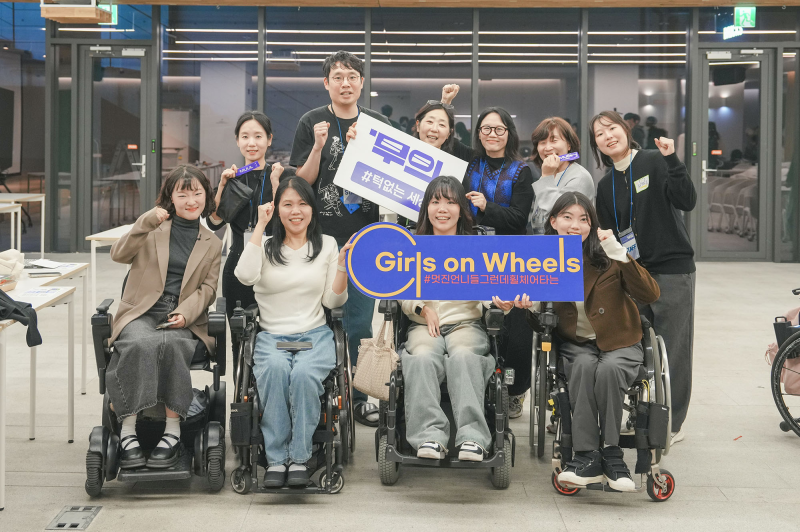
When Muui conducts accessibility projects as part of its CSR initiatives with companies such as SM, YG, and LG Electronics, we always request that their employees be included. While the response varies depending on the needs and willingness of the person in charge, we want as many people as possible to experience Muui's activities even indirectly, and above all, we want to create change within those organizations. For example, when proposing the
1st Floor for All project, we offer various package options. Employees can participate directly by installing ramps, painting, or conducting research, or Muui can simply receive funding and execute the project; however, we emphasize that we prefer to work together. We also think extensively about how to tailor our approach to the essence of each company. With a construction supervision firm, we created a map of wheelchair-accessible locations and personally toured the sites using a wheelchair. Our goal was for them to experience firsthand how difficult even small curbs can be, and for them to realize that they need to apply accessibility in their work beyond what is required by law in the future. At LG Electronics, there is a lot of talk about how making things convenient for the disabled also makes them convenient for the elderly; that the silver appliance market is growing and benefits the company, so people with disabilities should be viewed as customers rather than complainants; and that it would be great if people with disabilities could participate directly in projects. Muui conducts projects that facilitate such activities. The year before last, Muui and LG Electronics collaborated on a project called
Bold Move. The theme was not only for people with disabilities to propose appliance features but also for them to regain confidence through Bold Move community activities. I think we will likely continue this project this year as well. I hope to see more companies like this emerge.
Interview, edited by Soik Jung
English editing by Alice S. Kim